
The Best Fluffy Pancakes recipe you will fall in love with. Full of tips and tricks to help you make the best pancakes.
Table of contents
- What Is Sauce Chicken?
- The Best Cuts for Sauce Chicken
- The 5 Essential Sauce Chicken Styles
- How to Build a Perfect Sauce
- Pro Cooking Techniques
- Common Mistakes to Avoid
- Serving & Pairing Ideas
What Is Sauce Chicken?
Sauce chicken is one of those deceptively simple concepts that can take years to truly master. At its core, it refers to any preparation where chicken is cooked in — or generously coated with — a flavorful sauce. But that one sentence barely scratches the surface.
From the sticky, caramelized glaze of a Korean gochujang-glazed thigh to the silky, herb-studded pan sauce of a classic French poulet à la moutarde, sauce chicken spans every cuisine on earth. What they all share is this: the sauce is not an afterthought. It is the dish.
After spending over a decade cooking professionally and testing hundreds of variations, I can tell you that the difference between average and extraordinary sauce chicken comes down to three things — the right cut, the right sauce-building method, and one cooking technique most home cooks skip entirely.
“The sauce is not a garnish — it’s the soul of the dish. Build it with the same respect you give the protein.”
The Best Cuts for Sauce Chicken
Not all chicken cuts behave the same way when cooked in sauce. Understanding which cut to use — and why — is the first skill every cook should develop.
Bone-in, skin-on thighs are, without a doubt, the workhorse of sauce chicken. The bones release gelatin as they cook, which naturally thickens your sauce and adds depth. The fat under the skin bastes the meat continuously, keeping it moist even if your sauce reduces aggressively. For long-braised applications like cacciatore or adobo, thighs are virtually foolproof.
Boneless, skinless thighs are the best choice when you need faster cooking or want sauce clinging to every surface. They absorb marinades beautifully and stay tender from medium to high heat. For stir-fry-style sauce chicken with bold Asian-inspired sauces, boneless thighs are the move.
Chicken breasts work well in sauce chicken, but they demand more care. They overcook quickly and have far less connective tissue, so your sauce needs to do the heavy lifting in terms of moisture and flavor. Poaching breasts gently in a flavorful sauce, rather than searing and then saucing, yields much better results.
Pro Tip
For the most flavorful sauce chicken, always pat your chicken completely dry before searing. Moisture on the surface creates steam, which prevents that golden, caramelized crust that makes fond — the sticky browned bits that form the base of any great pan sauce.
The 5 Essential Sauce Chicken Styles
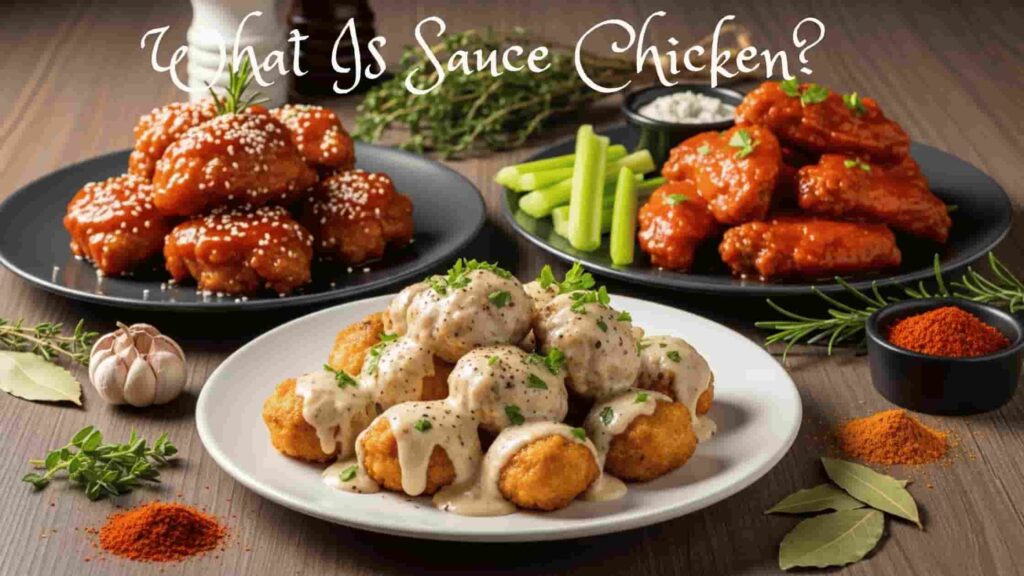
Sauce chicken takes many forms around the world. Here are five styles every serious home cook should know:
- Pan Sauce
Fond-based, deglazing with wine or stock. Classic French technique.
- Braised Chicken
Slow-cooked in liquid. Ideal for deeply flavored, fall-apart results.
- Glazed Chicken
Reduced sticky sauce applied during cooking. Asian-style favorite.
- Creamy Sauce
Butter, cream, and aromatics. Rich, elegant, and endlessly versatile.
- Tomato-Based
Long-simmered with herbs and aromatics. Robust, Italian-inspired classics.
How to Build a Perfect Sauce
This is where most home cooks lose their way. A great sauce for chicken isn’t just liquid poured over meat — it’s a constructed flavor system built in layers.
Start with aromatics. Whether that’s shallots and garlic for a French-style pan sauce, ginger and lemongrass for a Southeast Asian preparation, or onion and tomato for a West African stew, the aromatic base determines the sauce’s identity. Take your time here — cook your aromatics low and slow until they’re deeply sweet and translucent before adding any liquid.
Next, consider your umami backbone. A splash of soy sauce, a spoonful of tomato paste, a few anchovies dissolved in oil, or even a parmesan rind simmered in stock — these seemingly small additions provide the savory depth that separates a flat sauce from one that makes people ask for the recipe.
Then comes the liquid: stock, wine, coconut milk, citrus juice, or a combination. Always taste your liquid before adding it. Reduce it if necessary. Season as you go, not just at the end.
Finally, finish your sauce off-heat. A knob of cold butter whisked in at the end creates a glossy, velvety texture. Fresh herbs stirred in at the last moment preserve their brightness. A squeeze of lemon lifts everything and balances richness.
Pro Cooking Techniques
One technique that transforms sauce chicken across all styles is basting. Once your chicken is in the pan or oven, spoon the sauce over it every 10–15 minutes. This builds up glaze layers, promotes even cooking, and keeps the surface from drying out. It takes very little effort but makes a visible and tasteable difference.
Another underused technique is reverse searing for sauced chicken. Instead of searing first and finishing in sauce, some recipes benefit from cooking the chicken slowly in sauce first — bringing it 95% of the way — then blasting it under a broiler for 2–3 minutes to achieve caramelization. This gives you fully cooked, saucy chicken with crispy edges.
For braised sauce chicken specifically, always sear the chicken in batches. Crowding the pan drops the temperature and causes steaming rather than browning. A proper sear before braising is what turns a simple stew into something with genuine complexity.
Common Mistakes to Avoid
The most common mistake I see is adding sauce too early in a high-heat preparation. Sugar-rich sauces — especially honey, teriyaki, and barbecue-based ones — burn quickly. Add them in the final 5–8 minutes of cooking, not at the start.
The second mistake is under-seasoning the sauce itself. Your sauce needs enough salt and acid to penetrate and season the chicken as it cooks. Taste repeatedly and adjust as you go. A sauce that tastes slightly too intense on its own will taste perfect when balanced against the chicken.
Finally, don’t rush the resting step. Once your sauce chicken is done, let it sit for 5 minutes before serving. This allows the juices to redistribute throughout the meat. Cut into it immediately and you’ll lose those juices directly onto your plate rather than into each bite.
Serving & Pairing Ideas
Sauce chicken is incredibly versatile as a centerpiece dish. Rich, tomato-based sauce chicken pairs beautifully with crusty sourdough or buttered polenta, which soak up every last drop of sauce. Creamy sauce chicken with mushrooms calls for egg noodles or mashed potatoes. Asian-style glazed sauce chicken works best alongside steamed jasmine rice and a light cucumber salad to balance the sweetness.
For lighter weeknight meals, serve sauce chicken over wilted greens or grain bowls. The sauce acts as a dressing, coating each component and tying the bowl together without any additional condiments needed.
The Takeaway
Sauce chicken is one of the most rewarding categories of cooking precisely because the variables are so flexible — nearly any sauce, any cut, any cuisine can work. The constants that make it succeed are universal: dry your chicken, build your sauce in layers, baste generously, season throughout, and never rush the finish. Master these principles and every sauce chicken you make will taste like it came from a professional kitchen — because in practice, it did.